
A significant boardroom battle has erupted at Tata Sons, India's largest conglomerate, following the board's decision to proceed with a public listing and extend N Chandrasekaran's tenure as executive chairman, moves opposed by Noel Tata, who represents the majority shareholder Tata Trusts.

Venu Srinivasan, a trustee and Tata Sons nominee director, has requested a regulatory inquiry into the governance of the Sir Dorabji Tata Trust, one of the charitable entities controlling 66 per cent of Tata Sons, citing concerns over trustee appointments and the trusts' involvement in commercial affairs.

Indian benchmark indices, Sensex and Nifty, closed higher, primarily driven by bank stocks and encouraging US inflation data, which fuelled expectations of a less aggressive Federal Reserve monetary policy. However, escalating US-Iran hostilities tempered investor sentiment, leading to some profit-taking.

The asymmetry in deposit and credit growth is the biggest challenge before the Indian banking industry. For every 100 deposit that a bank mobilises, it needs to keep 3 with the banking regulator in the form of cash reserve ratio on which it doesn't earn any interest. Another 18 is used for buying government bonds (statutory liquidity ratio). This means, a bank is left with 79 for giving credit. Add to this, its capital which can be used for giving loans. Most banks are facing a fund crunch. They need to find ways to attract deposits if they want to sustain credit growth, explains Tamal Bandyopadhyay.

India's trade deficit reached a six-month high of $31.98 billion in July, driven by a sharp increase in imports, particularly crude oil, electronic goods, coal, and fertilisers. Both merchandise exports and imports recorded their second-highest levels during the same period.

HDFC Bank's share in active mutual fund schemes has fallen to multi-year lows, despite overall MF ownership in the bank rising, as the stock faces weak performance, soft margins, and governance concerns.

Indian mutual fund holdings in overseas equity securities increased by 37.5 per cent year-on-year to approximately '93,602 crore by March-end, according to RBI data. This growth is attributed to mark-to-market gains from a global market rally and heightened investor interest, with the US remaining the primary destination for these investments.

Tata Sons, the holding company of the Tata group, continues to be classified as an 'upper-layer non-banking financial company' (NBFC) by the Reserve Bank of India (RBI), despite its application to deregister as an NBFC-Core Investment Company (CIC) remaining under consideration. This classification subjects it to enhanced regulation and a mandatory listing requirement, which remains uncertain.

'I don't really expect the August increase in food prices, which was close to 6 per cent, to persist as we go close to the end of this year.'
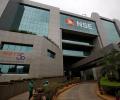
The National Stock Exchange (NSE) has set its initial public offering (IPO) price band at Rs 1,700-1,785 per equity share, with the subscription period running from September 17 to September 21, aiming to raise up to Rs 22,569 crore.

Indian benchmark indices, Sensex and Nifty, experienced a significant downturn, with Sensex tanking 778 points and Nifty closing at a five-month low, driven by surging crude oil prices, geopolitical tensions, and fears of further interest rate hikes by major central banks.

RBI says polymer notes have a significantly longer lifespan, potentially reducing printing costs and replacement frequency.
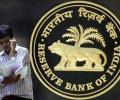
The Reserve Bank of India (RBI) was a net seller of the US dollar in August, reversing its net buying position from July. During the current financial year up to August, the central bank had sold a net $1.11 billion. The RBI sold a net total of $6.49 billion worth of the foreign currency in August, according to the central bank's monthly bulletin.

Tamil Nadu Chief Minister C Joseph Vijay announced a comprehensive waiver of cooperative farm loans, providing full relief for loans up to Rs 75,000 and partial waivers for higher amounts, benefiting over 1.38 lakh farmers with an additional financial commitment of Rs 953.06 crore.

Chandigarh is set to launch the Central Bank Digital Currency (CBDC), or digital rupee, for Direct Benefit Transfer (DBT) under the Pradhan Mantri Garib Kalyan Anna Yojana (PMGKAY) on August 14. This initiative makes Chandigarh the first Union Territory to fully roll out CBDC-based DBT for food subsidy, enhancing transparency and efficiency in welfare delivery. The digital rupee, issued by the RBI, will be purpose-bound for purchasing foodgrains from authorised merchants.

S&P Global Ratings projects India's economic growth to slow to 6.6 per cent in FY27, down from 7.7 per cent in FY26, citing energy stress and a potential sub-par monsoon.

An EY India report suggests that banks must compete on customer experience and evolve physical branches into phygital advisory hubs. The report highlights the importance of anticipating customer needs and blending digital tools with human interaction.

India's banking system is grappling with a persistent liquidity surplus exceeding Rs 5 trillion, driven by significant government spending and bond redemptions, leading market participants to anticipate the Reserve Bank of India will step up Variable Rate Reserve Repo operations to manage the excess funds.

India's net foreign direct investment (FDI) surged more than fourfold to $6.58 billion in April 2026, driven by a significant increase in equity inflows and reduced repatriation by foreign investors, according to the Reserve Bank of India (RBI).

Making UPI payments fee-based for some transactions could enhance mental reservations against digital payments -- which have largely been overcome -- once more. Do we want to regress?, asks R Jagannthan.

Moody's Ratings has highlighted that Indian banks are among the most exposed in the Asia-Pacific region to the West Asia crisis, primarily due to India's high dependence on energy imports, which could lead to increased inflation, higher interest rates, and strained borrower cash flows.

The Indian corporate bond market witnessed a significant surge, with companies raising nearly Rs 16,000 crore in a single day, primarily led by state-owned financial institutions and NBFCs. This strong momentum, driven by improved borrowing conditions and investor confidence, is expected to persist.

Inflows into foreign currency non-resident (bank), or FCNR (B), deposits have significantly underperformed market expectations, leading to a more than 1 per cent depreciation of the rupee against the dollar this week. Analysts point to fading RBI support measures, tepid interest due to rising global bond yields, and narrowing interest rate spreads compared to 2013 as key challenges.

Public-sector banks (PSBs) have reported a substantial increase in non-interest income for Q1FY27, primarily driven by the sale of Priority Sector Lending Certificates (PSLCs) backed by their rapidly expanding gold loan portfolios. This strategy has allowed several lenders to book significant profits by exceeding priority sector lending targets.

Indian benchmark indices, Sensex and Nifty, traded flat in early deals due to elevated crude oil prices exceeding USD 100 per barrel and persistent geopolitical tensions, which subdued investor risk appetite.

'Nitishji as CM never supported the UCC and publicly expressed his strong reservations over UCC.'

The Reserve Bank of India (RBI) has declared a record Rs 2.87 lakh crore dividend to the government for the 2025-26 financial year, offering significant financial flexibility amidst global economic uncertainties.

'You can't have a runaway board that takes decisions against the active disagreement of the 66 per cent shareholder.'
'You can't have a runaway board that takes decisions against the active disagreement of the 66 per cent shareholder.'
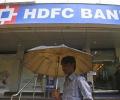
HDFC Bank, India's largest private-sector lender, has revised its FY27 growth trajectory, stepping back from earlier guidance to align with a more measured 12 per cent year-on-year expansion, citing geopolitical uncertainties.

A stake sale by Tata Trusts will help it to have a larger corpus that could be used to balance the unequal dividends that flow from Tata Sons on an ongoing basis.

For millions of Indians, this number has become one of the most important financial indicators. It can influence not only whether a bank approves a loan but also the interest rate you pay, the credit limit you receive and, in some cases, how quickly your application is processed.

The Reserve Bank of India (RBI) has granted approval for UAE-based Emirates NBD (ENBD) PJSC to acquire up to a 74 per cent stake in RBL Bank for $3 billion, marking the largest foreign investment ever in a domestic Indian bank.

Analysts predict that crude oil prices, geopolitical tensions in West Asia, and upcoming inflation data will be the primary drivers of the Indian stock market this week, alongside foreign investor activity and domestic quarterly earnings.
Members of the Reserve Bank of India's (RBI) Monetary Policy Committee (MPC) have indicated that interest rate hikes may be necessary sooner rather than later, as headline inflation is projected to rise from its current benign levels in the coming months, according to the minutes of the August review.

The Telecom Regulatory Authority of India (Trai) has expanded the 1600-number series to include utilities, courier, and logistics companies, introducing the new 1601 series to help consumers identify legitimate calls and prevent widespread fraud and impersonation.

The Payments Council of India has confirmed that Unified Payments Interface (UPI) services will continue to be free for consumers and small merchants, despite a recent Lok Sabha Bill. This clarification addresses concerns about potential charges, emphasising that while a sustainable financial model for UPI infrastructure is being developed, transaction charges will not be passed on to users or small businesses.

A Mumbai court has denied bail to Hitesh Mehta, the former General Manager of New India Cooperative Bank, who is accused of orchestrating a Rs 122 crore scam. The court cited the severity of the economic offence and the complexity of the trial as reasons for the denial.

Analysts predict that the Reserve Bank of India's interest rate decision, the evolving situation in West Asia involving the US-Iran conflict, and crude oil prices will be the primary factors influencing investor sentiment in the Indian stock market this week.

That means making it easier to invest, protecting investors through predictable rules, and avoiding policy reversals after investments have been made, notes Rajeswari Sengupta.
